
 Sales: 01943 660870


Popular Eating Apple


Select type
Available options
Braeburn Apple Tree
Popular Eating Apple


Description
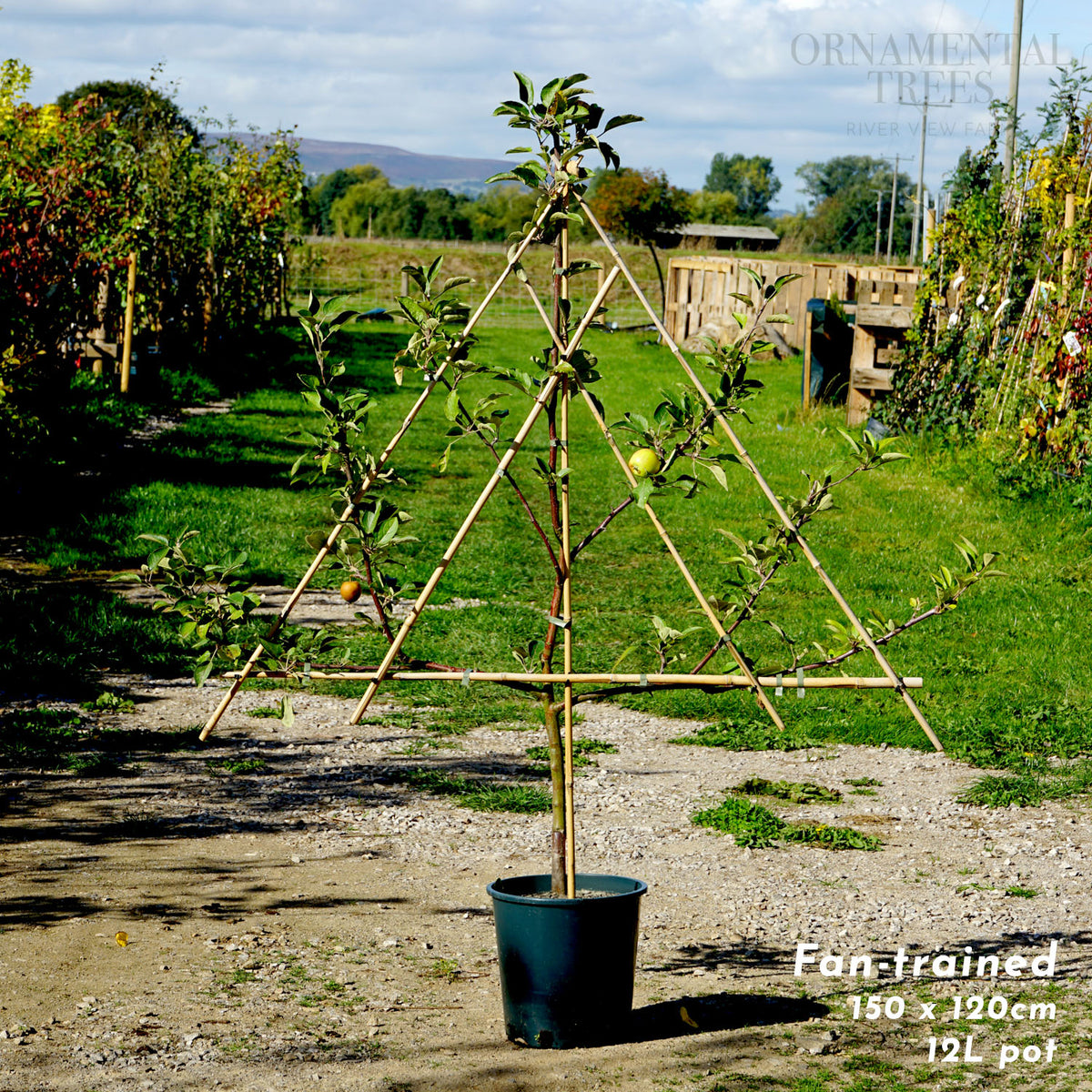
Braeburn apple trees produce one of the world's favourite eating apples, but growing your own allows you to enjoy fruit that tastes far superior to cold-stored supermarket examples. Braeburn apples look as good as they taste, with red-brown skin flushed with orange streaks. They are crisp and firm with aromatic juicy flesh and an outstanding balance of acidity and sweetness.
Self-fertile, the Braeburn apple tree produces superb crops of high-quality apples that are ready to harvest in mid-October. They store well for up to 3 months.
Originating in New Zealand, Malus domestica 'Braeburn' was discovered in the 1950s and requires a warm, sheltered position where it can ripen its fruit to perfection. Also known as Braeburn Hillwell apple tree.
MAINLAND UK — excluding remote locations
Small trees & shrubs*: £12 for 1 or more
Larger shrubs & mature Japanese Maples: £35 for 1 or more
Mature, Pleached, Hedging & Specialist Trees: £65 for 1 or more
REMOTE UK LOCATIONS — including Scottish Highlands & Islands
Small trees & shrubs*: £35 for 1 or more
Larger shrubs & mature Japanese Maples: £65 for 1 or more
Mature, Pleached, Hedging & Specialist Trees: £120 for 1 or more
*Small trees & shrubs are typically supplied in pots up to 15 litres.
Additional remote-location surcharges may apply.
Unfortunately, we are not able to make delivery of live plants to Northern Ireland or any countries outside of the UK.
Product Details
Description
Braeburn apple trees produce one of the world's favourite eating apples, but growing your own allows you to enjoy fruit that tastes far superior to cold-stored supermarket examples. Braeburn apples look as good as they...
Braeburn apple trees produce one of the world's favourite eating apples, but growing your own allows you to enjoy fruit that tastes far superior to cold-stored supermarket examples. Braeburn apples look as good as they taste, with red-brown skin flushed with orange streaks. They are crisp and firm with aromatic juicy flesh and an outstanding balance of acidity and sweetness.
Self-fertile, the Braeburn apple tree produces superb crops of high-quality apples that are ready to harvest in mid-October. They store well for up to 3 months.
Originating in New Zealand, Malus domestica 'Braeburn' was discovered in the 1950s and requires a warm, sheltered position where it can ripen its fruit to perfection. Also known as Braeburn Hillwell apple tree.
Planting & Care
Delivery Information
MAINLAND UK — excluding remote locations
Small trees & shrubs*: £12 for 1 or more
Larger shrubs & mature Japanese Maples: £35 for 1 or more
Mature, Pleached, Hedging & Specialist Trees: £65 for 1 or more
REMOTE UK LOCATIONS — including Scottish Highlands & Islands
Small trees & shrubs*: £35 for 1 or more
Larger shrubs & mature Japanese Maples: £65 for 1 or more
Mature, Pleached, Hedging & Specialist Trees: £120 for 1 or more
*Small trees & shrubs are typically supplied in pots up to 15 litres.
Additional remote-location surcharges may apply.
Unfortunately, we are not able to make delivery of live plants to Northern Ireland or any countries outside of the UK.
MORE TO GROW YOUR GARDEN
Perfect Pairings


 Award Winner
 Award Winner

'Gloire De Sablons' Pinkcurrant Bush
Ribes rubrum
Bush, 30-40cm, 3L pot

Bedford Giant Blackberry Bush
Rubus fruticosus
Bush, 40-60cm, 3L pot
 Award Winner

Adams Pearmain Apple Tree
Nutty-flavour Eating Apple
Single stem tree, 125-175cm, MM106 (semi-vigorous), 12L pot
WELCOME TO ORNAMENTAL TREES
Why Choose Ornamental Trees?

Quality Plants, Guaranteed
We only send out plants we’d be happy to receive ourselves. Enjoy peace of mind with our 12-month plant guarantee.

Friendly, Expert Advice
With over 20 years’ horticultural experience, our friendly, knowledgeable team is here to help every step of the way.
Diverse Range of Structural Planting
From specimen trees to living screens, our range offers over 1,000 plant varieties and a wide choice of sizes.
Don't just take our word for it - See what our customers are saying


